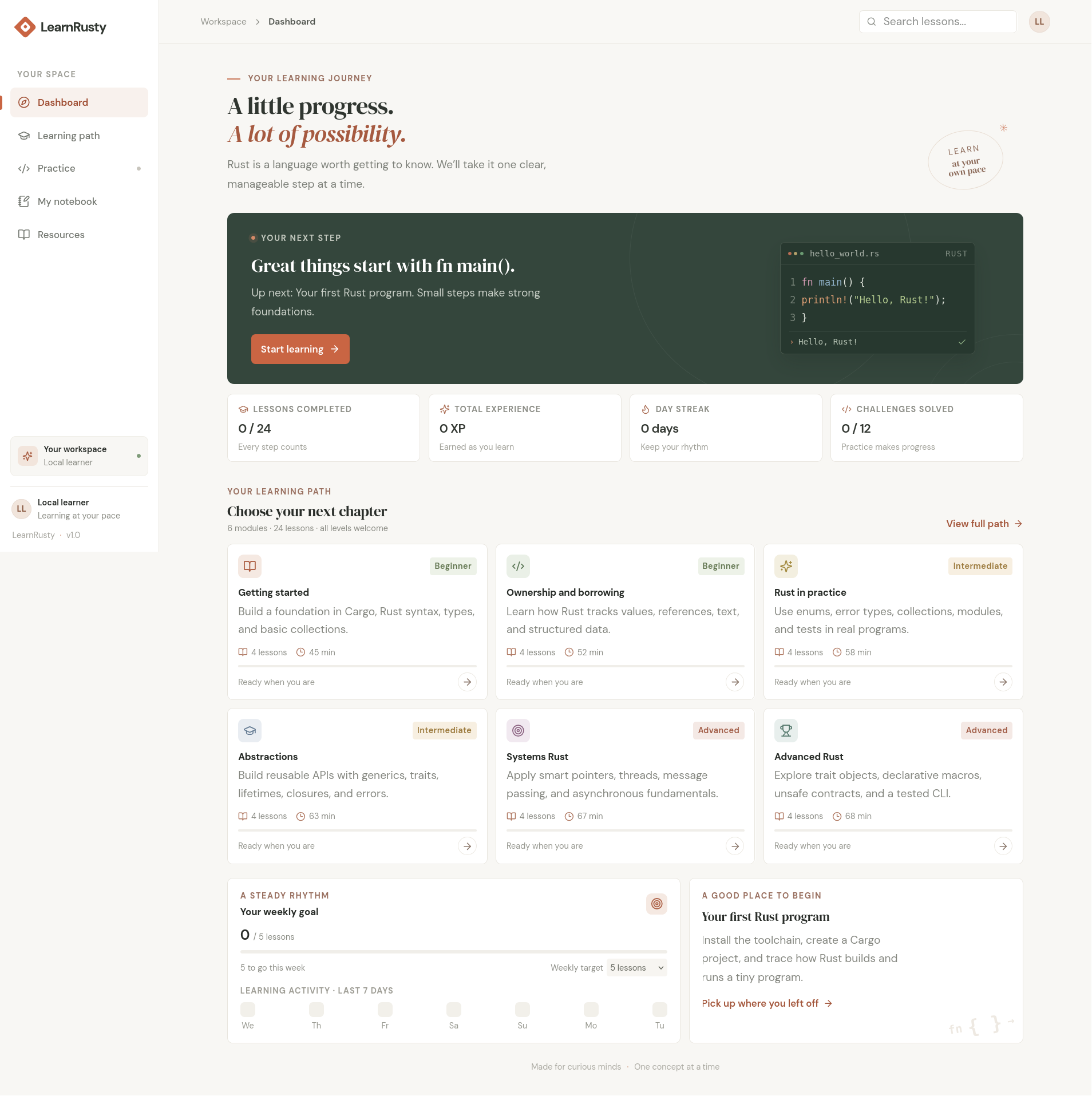
Yesterday, a thought kept bugging my mind. I kept seeing everyone vibecoding, or more elegantly put, using agentic engineering, to create these amazing software productions. So I figured, why not just throw caution into the wind once again, and make something? Remember what I said something in my last post? Of how learning Rust was probably easier than publishing a mobile app to the Google Play Store? So I did it. Here's LearnRusty, a Rust programming language learning platform. Link to repo.
I started with a prompt. In it, I:
- let it know that this was an autonomous session. Therefore, I would not intervene at any point
- It was a project manager, whose job was research and delegation to smaller worker agents to execute its vision
- The only requirements I gave were that:
- This is a learning platform
- It uses SQLite as a database
- Utilize typecheck, lint, build, unit/integration tests, browser tests to verify its work
- Its technical choices had to be documented in What-Why-How in a report
- It was given a Kanban board to keep track of its own work (because it was a project manager), with columns: Backlogs, In Progress, Review, Done
- asked it to update project contexts in
AGENTS.mdand itsagent-docsas it was building. Other sessions will read back from thisAGENTS.md - asked it to do git commit often. Each commit should be small enough that a human can review to understand your work and context behind each change.
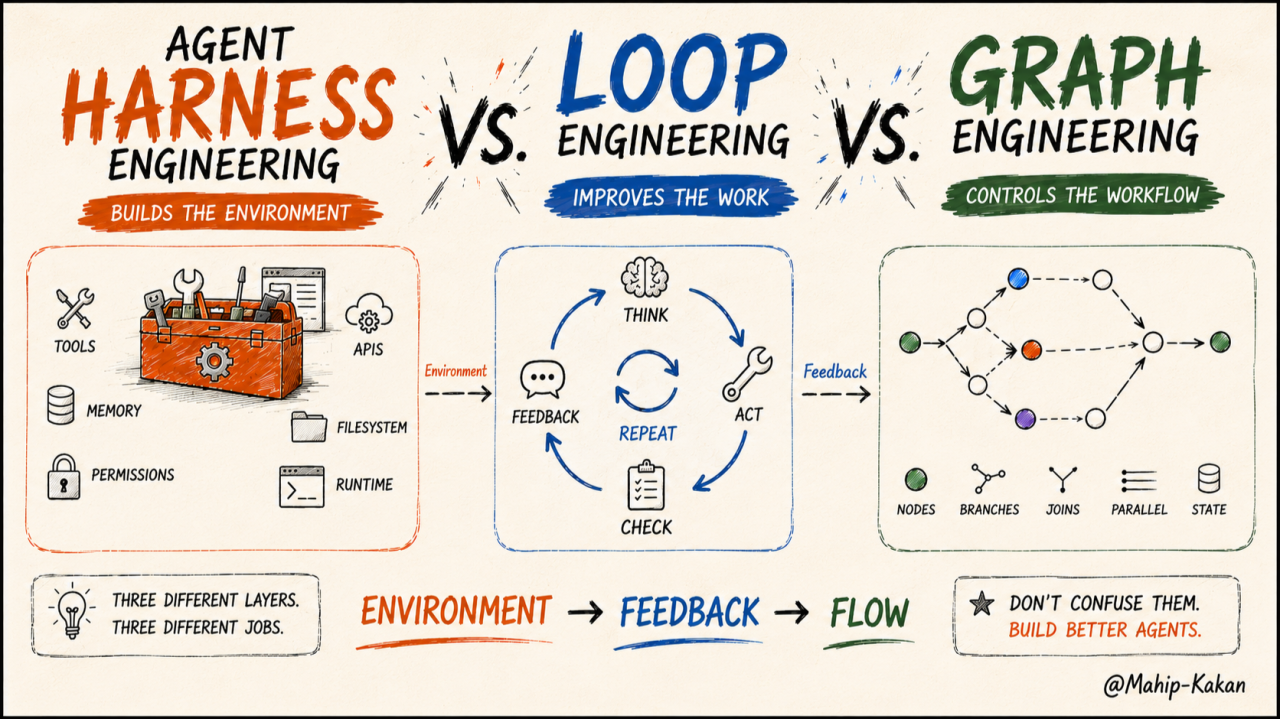
This is the first time I have built a project with a coding agent without using Spec-driven development. This is Loop Engineering, at least the way I imagined it. I give an AI agent a task, a way to verify its work. An AI agent comes along, works, verifies its work, then works to fix the flaws. It's a genius closed loop. Or is it?
Turns out, It works, sort off. By not giving it anymore instruction beyond a platform and a database, it chose React and ExpressJS. I was hoping for Rust Axum since it is also Rust, but the agent decided full Typescript for consistency. Beyond that, its UI design are far off, its coding style leaves a lot to be desired (this part was already reinforced by system prompts). AI coding agent has a tendency to overcrowd a file instead of splitting out code into multiple components for easier viewing, which is why when you look at src/App.tsx (frontend) or server/app.ts (backend), there is a ginormous wall of text. And the UI is, of course, generic. And font size is especially small, even when I handed it Playwright browser with screenshot ability. So, naturally, I told it to increase font size, with barely any effect. One reason is that the font choice of the coding agent is the thin line ones. And it's clear the agent built a site for an agent, not for me, since AI agent can read pixel-sized fonts. I can't.
In conclusion, it's nice to do this for an experiment in loop engineering. Not something I would be proud to put in production, but more of a throwaway work. By the way, this is done with GPT Sol and Luna. DearDish was made with GLM, DeepSeek and Google Gemini 4 Argon. And that looks much better (even if also AI-generic).
Learn more about Agent Harness Engineering vs. Loop Engineering vs. Graph Engineering